


Be the first to get your copy at https://play.google.com/store/books/details?id=jFzSEQAAQBAJ&pli=1
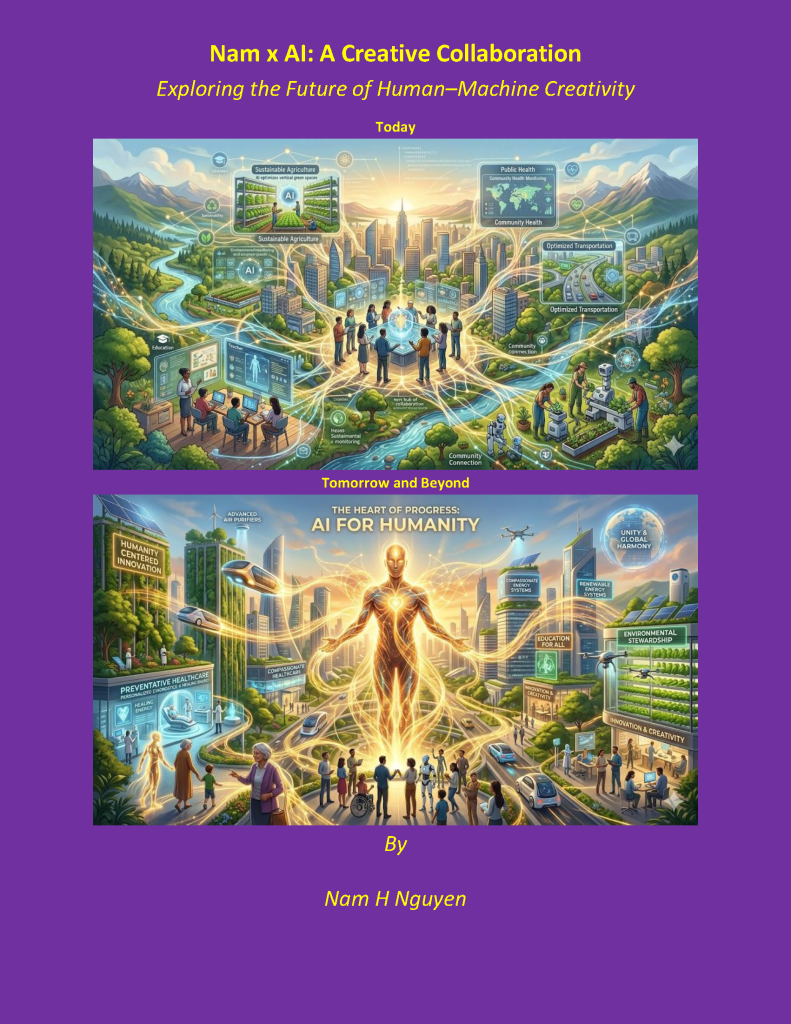
Artificial intelligence (AI) is reshaping how organizations operate, compete, and innovate. At its core, AI refers to technologies that enable computers to learn from data, recognize patterns, make decisions, and perform tasks that traditionally require human intelligence. It’s not a single tool, but a collection of capabilities—like machine learning, natural language processing, and computer vision—that work together to help systems understand information and act on it.
Today, AI is woven into everyday experiences: recommending what we watch, helping doctors analyze medical images, powering customer service chatbots, and optimizing supply chains. For businesses, AI offers clear advantages: greater efficiency, faster insights, improved customer experiences, and the ability to scale decision-making in ways that weren’t possible before.
At the same time, AI introduces important considerations. Responsible use, data quality, transparency, and fairness are essential to building trust and ensuring that AI-driven decisions align with organizational values and regulatory expectations.
In short, AI is both a strategic opportunity and a strategic responsibility. Organizations that embrace it thoughtfully can unlock meaningful value while preparing for a future where intelligent systems play an increasingly central role in work and society.
The Nam x AI: A Creative Collaboration — Exploring the Future of Human–Machine Creativity
The Nam x AI is a valuable and versatile resource for understanding today’s rapidly evolving AI landscape. It highlights the most influential and widely recognized AI companies—from global tech giants like Google, Microsoft, Amazon, and Apple to leading-edge startups such as OpenAI, Anthropic, and xAI.
Below is a refined overview of the major players shaping the future of artificial intelligence.
Leading Tech Giants and Prominent AI Startups
- Google (Alphabet)
A pioneer in AI research and applications, Google develops technologies across search, cloud computing, and autonomous systems. Its AI ecosystem includes Google Brain, DeepMind, and extensive AI integration in products like Google Assistant and Workspace.
- Microsoft
A major force in AI innovation, Microsoft has invested heavily in OpenAI and infused AI capabilities into Bing, Edge, and Azure. Its offerings include ChatGPT-powered tools and enterprise-grade AI solutions for businesses.
- Amazon
Amazon leverages AI across Alexa, Amazon Go stores, recommendation engines, and AWS. Its AI footprint spans e-commerce, logistics, cloud computing, and voice-driven personal assistants.
- Apple
Apple focuses on AI that enhances user experience, privacy, and ecosystem integration. Apple Intelligence brings advanced AI features to Siri and other software tools, strengthening its personal assistant capabilities.
- OpenAI
Creator of ChatGPT and the GPT model family, OpenAI is a global leader in generative AI. Its rapid growth and significant venture funding have positioned it as one of the most influential AI companies worldwide.
- Anthropic
Anthropic specializes in AI safety and large language models, offering Claude as a major competitor in the generative AI space.
- xAI
Founded by Elon Musk, xAI focuses on building broadly capable AI systems. The company has raised more than $12 billion to accelerate its research and development.
- Cursor (Anysphere)
Cursor is an AI-powered coding assistant that helps engineers write and edit code efficiently. The company is valued at $2.5 billion and has demonstrated strong revenue growth.
- Speak
Speak is an AI-driven language tutoring app with millions of users and a valuation of $1 billion, making it one of the most successful AI education startups.
- OpenEvidence
OpenEvidence develops AI-powered search tools for medical information, supporting clinicians and healthcare professionals with reliable, research-backed insights.
Other Notable AI Companies
- IBM
IBM delivers enterprise AI solutions through Watson and watsonx.ai, focusing on automation, document processing, and business applications.
- NVIDIA
NVIDIA provides essential AI hardware and software, including GPUs and frameworks used to train and deploy large-scale AI models.
- Intel
Intel develops AI chips and accelerators for data centers and edge computing, supporting a wide range of AI workloads.
- Mobileye
A leader in autonomous driving technology, Mobileye specializes in AI-powered driver-assistance systems and self-driving solutions.
- Samsung
Samsung integrates AI across its consumer electronics, smart devices, and semiconductor technologies.
These companies represent a dynamic mix of established industry leaders and innovative startups. Together, they are driving AI adoption across sectors such as healthcare, finance, autonomous vehicles, cloud computing, and consumer electronics. Their influence—measured through market impact, technological breakthroughs, and global reach—positions them as the most impactful AI organizations shaping both today’s landscape and the future of human–machine creativity.
This Nam x AI: A Creative Collaboration — Exploring the Future of Human–Machine Creativity eBook covers more than 63 in‑depth topics.
